Introduction
About the Loki and Vali Clusters
The Loki and Vali clusters are high-performance computing (HPC) systems at Augusta University, designed to facilitate cutting-edge research by providing computational resources to faculty, students, and research teams. These clusters are optimized for large-scale parallel computing and data-intensive applications across multiple disciplines, including bioinformatics, physics, engineering, and artificial intelligence.
Both clusters are part of Augusta University’s HPC infrastructure, managed by Information Technology Services (ITS), and are equipped with centrally managed resources, storage, software environments, and technical support. The clusters support a range of computational workloads, including simulation, modeling, machine learning, and large-scale data analysis.
Loki and Vali Namesake

In Norse mythology, Loki is a legendary mischievous shape-shifter who walks the fine line between chaos and ingenuity. He is unpredictable, clever, and always pushing boundaries sometimes for good, often for trouble. The Loki cluster embodies this same spirit: a system built for flexibility, capable of adapting to a variety of research needs, from simulation to artificial intelligence. Like its namesake, Loki thrives in complex, dynamic environments where creativity and innovation drive discovery. The Loki cluster is designed to empower exploratory research, experimental workflows, and cutting-edge computational science.
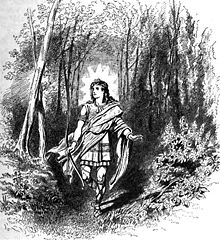
On the other hand, Vali is a child of Loki, capable of utilizing mischief if needed, but favoring renewal hoping to restore balance. Unlike the cunning Loki, Vali is straightforward, relentless, and unwavering. His strength lies in precision and efficiency. The Vali cluster reflects these qualities: optimized for stability, high-throughput computing, and data-intensive tasks that demand reliability. The Vali cluster is designed to support and sustain classical and emerging computational research.
Feature |
Loki Cluster |
Vali Cluster |
|---|---|---|
Compute Focus |
High-performance computing for PhD researchers and PIs |
Academic-focused cluster for students in specific courses |
Scheduler |
SLURM |
SLURM |
Storage |
Lustre & NFS ( |
NFS-based ( |
Compute Resources |
Mixed Intel and AMD CPU/GPU architecture with enhanced-memory, high-memory, and AI/ML-optimized nodes. |
Primarily CPU-based but includes dedicated GPU nodes. |
Node Specifications |
Nodes from 20 to 256-core, memory from 91GB to 1.5TB, multiple GPU nodes |
Nodes with 32 to 64 cores, memory ranging from 128GB to 1TB, includes dedicated GPU nodes |
Partitions (Queues) |
|
|
Ideal Use Cases |
|
|
Acceptable Use
All users of the Loki and Vali clusters must comply with Augusta University’s Acceptable Use of Information Technology policy. This policy outlines the responsible use of the university’s IT resources, including:
Compliance with Laws and Policies: Users must adhere to all applicable laws, regulations, and university policies when utilizing IT resources.
Responsible Use: IT resources should be used in a manner that supports the university’s mission of education, research, and service.
Security Measures: Users are responsible for safeguarding the integrity and security of IT resources, including protecting account credentials and ensuring devices are secure and free from viruses.
Prohibited Activities: Unauthorized access, distribution of malicious software, and activities that interfere with the use of IT resources by others are strictly prohibited.
By adhering to these guidelines, users contribute to a secure and efficient computing environment that supports Augusta University’s academic and research endeavors.
Citations and Acknowledgements
To support the growth and continued funding of HPC resources, researchers are encouraged to acknowledge the use of the Loki and Vali clusters in their publications and presentations.
Acceptable citation examples include:
“The authors acknowledge the support of the Augusta University High Performance Computing Services (AUHPCS) for providing computational resources contributing to the results presented in this publication/report.”
If your work acknowledges the use of these clusters, please send a brief email to auhpcs_support@augusta.edu
Cluster Description for Grant Submissions
Augusta University’s High Performance Computing (HPC) cluster supports a broad range of research across disciplines such as bioinformatics, genomics, population sciences, mathematics, chemistry, physics, data science, AI, and digital forensics. It is also well-suited for complex simulations, modeling, visualization, and rendering workloads.
Key System Specifications
Compute Power:
2,472 CPU cores
93,184 CUDA cores
8,192 Tensor cores
100.8 TFLOPS theoretical peak performance
Node Breakdown:
General, enhance-memory, middle-memory, and high-memory CPU nodes
GPU nodes with NVIDIA Quadro RTX6000, Tesla T4, and A100 GPUs
Intel Xeon and AMD EPYC processor architectures
Storage & Interconnects:
240TB Lustre scratch
1PB Lustre project storage
HDR InfiniBand and 10 Gb/s Ethernet
This infrastructure provides the performance and flexibility needed for cutting-edge, multidisciplinary research.
For further assistance, visit our Support Page or contact our team at auhpcs_support@augusta.edu.